World Alzheimer’s Day Celebrated at Lala Lajpat Rai Memorial Medical College, Meerut

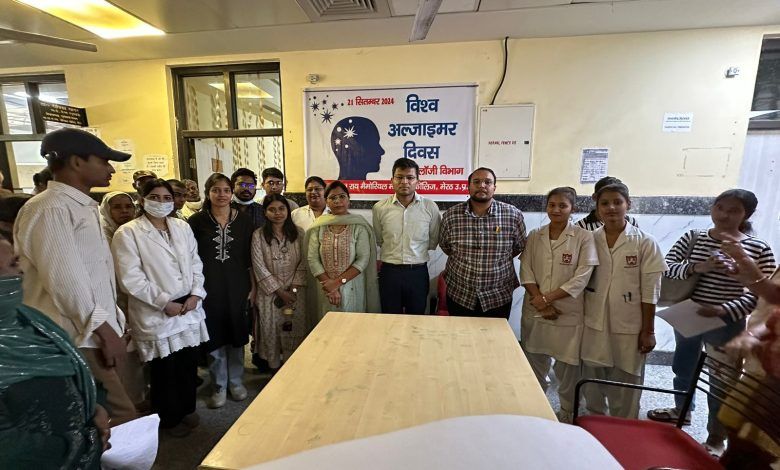
Meerut : Lala Lajpat Rai Memorial Medical College marked World Alzheimer’s Day with an enlightening event organized by the Neurology Department under the guidance of Principal Dr. R.C. Gupta. The event aimed to raise awareness about Alzheimer’s disease, a neurodegenerative disorder that predominantly affects older adults, but is now increasingly being observed in younger individuals as well.
Addressing the gathering, Dr. R.C. Gupta emphasized the significance of World Alzheimer’s Day, observed annually on September 21 to create awareness about the disease. “Alzheimer’s symptoms often go unnoticed, as they seem common, but without timely intervention, the condition can worsen dramatically,” he said, highlighting the importance of recognizing early signs.
Dr. Deepika Sagar, a neurologist at the college, explained the biological basis of the disease, stating that Alzheimer’s occurs due to abnormal protein formation in the brain, leading to shrinkage and cellular damage. “As incorrect proteins begin to form, memory cells in the brain become inactive, causing cognitive decline,” she noted. This early stage, termed Minimal Cognitive Impairment, if left untreated, can progress to Dementia, one of the hallmark symptoms of Alzheimer’s disease. Dr. Sagar assured that diagnosis and treatment for Alzheimer’s are available at the medical college and encouraged affected individuals to seek care.
Adding to the discussion, Dr. Ankit Gupta, another neuro-physician, elaborated on the psychological and memory-related deterioration caused by the disease. “Patients gradually lose their memory and mental capacity. Without timely treatment, they may eventually forget even their own identity,” he warned. Symptoms include confusion, irritability, lack of sleep, forgetting familiar names and places, and an overall decline in cognitive functions.
To prevent Alzheimer’s and maintain brain health, Dr. Gupta recommended several lifestyle changes, such as limiting mobile usage an hour before bedtime, avoiding keeping phones nearby while sleeping, reducing stress, ensuring 8–9 hours of sleep, daily exercise, walking for at least 30 minutes in fresh air, avoiding excessive junk food, and refraining from smoking and alcohol. He also stressed the importance of managing conditions like blood pressure, sugar, and cholesterol.
The program witnessed the participation of faculty members, staff, and students of the Neurology Department, who were keen to learn about this pressing health issue. The event underscored the need for greater awareness and timely intervention in tackling Alzheimer’s disease.
With the rise of Alzheimer’s cases, events like this play a crucial role in spreading knowledge and promoting proactive healthcare measures to combat this debilitating condition.