From Gurukul to Global Stage: International Symposium on Indian Knowledge System Held at Dewan V.S. Group of Institutions, Meerut
Meerut, February 13, 2026:
An international symposium on the theme “Indian Knowledge System” was successfully organized at Dewan V.S. Group of Institutions, NH-58, Patapur Bypass, Meerut, under the aegis of the Dewan Indian Knowledge System Forum and Dewan Innovation & Ushmayan Forum. The event was conducted under the guidance of Chairman Vivek Dewan, with the objective of highlighting the global relevance of India’s traditional knowledge systems and reinforcing the vision of a self-reliant India.
The program commenced with floral tributes and ceremonial lamp lighting before the idol of Goddess Saraswati, symbolizing the pursuit of wisdom and learning.
Eminent Guests and Thought Leaders
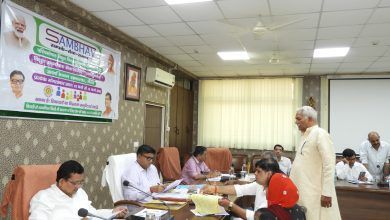
The symposium was graced by Basil Baradia, Chairman of the Indo-Arab Business Council, as Chief Guest, along with Dr. A.M. Newman, Vice President (Education), Indo-Arab Business Council. Distinguished guest Ramesh Chandra Gaur, Professor and Head (Administration), Indira Gandhi National Centre for Arts, also addressed the gathering.
Key speakers included Prof. Sushil Kumar Pandey (Department of History, Dr. Babasaheb Bhimrao Ambedkar University), Vivek Kumar Nautiyal (Assistant Professor, Physics, Chaudhary Charan Singh University), and Devkinandan Bhatt (Assistant Professor, Sociology, Chaudhary Charan Singh University, Meerut).
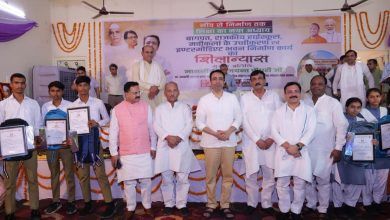
The dignitaries were felicitated with bouquets and mementos by Chairman Vivek Dewan, Advisor Dr. Shruti Arora, Principal Dr. Munendra Kumar, and Mr. Sandeep Kumar, Head of the Dewan Incubation Forum.
Launch of “From Gurukul to Global”
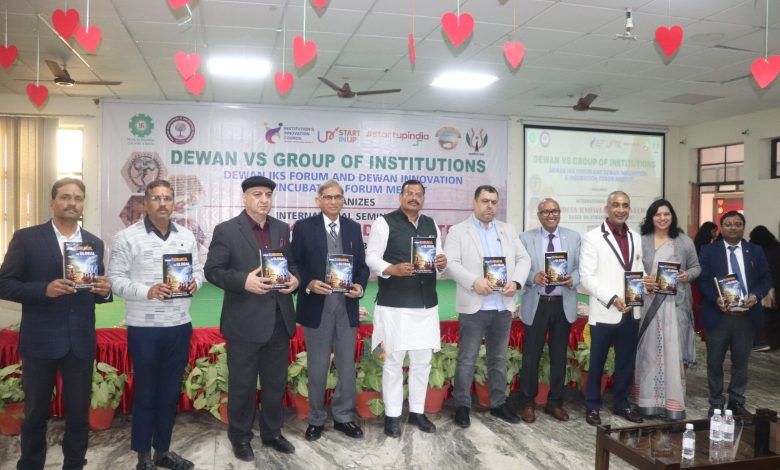
A major highlight of the event was the grand release of the book “From Gurukul to Global (The Journey of Indian Education System)”, authored by Dr. Shruti Arora and Principal Dr. Munendra Kumar. The book traces the historical evolution of Indian education, its philosophical foundations, and contemporary reforms under the National Education Policy 2020. It aims to bridge Indian knowledge traditions with global academic frameworks and is being recognized as an important contribution toward the revival of indigenous knowledge systems and international educational collaboration.
Key Insights from the Symposium
In his keynote address, Basil Baradia emphasized that Indian knowledge traditions provide ethical and inclusive guidance to the global community. He remarked that India’s intellectual heritage is not confined to history but actively influences modern global policy, commerce, and cultural dialogue. He called for leveraging international partnerships to elevate Indian research and education.
Dr. A.M. Newman underlined that Indian knowledge systems promote universal human values such as peace, coexistence, and global fraternity. He stated that systematic dissemination of this heritage worldwide could offer a moral compass to humanity.
Ramesh Chandra Gaur elaborated on the spiritual and philosophical foundations of Indian thought, asserting that spirituality remains central to India’s intellectual legacy. He stressed the need for academic revitalization and preservation of this heritage for the benefit of global society.
Prof. Sushil Kumar Pandey highlighted that while embracing Indian knowledge traditions is essential, it must be done with critical understanding rather than blind imitation. He pointed out that gender respect, social harmony, and ecological balance form the core of India’s worldview.
Speakers also emphasized that the Indian Knowledge System is not merely a relic of the past but a blueprint for future development, urging youth to reconnect with their roots and contribute to India’s global leadership through innovation and ethical scholarship.
Advisor Dr. Shruti Arora noted that the institution is actively working on research and publications related to Indian knowledge systems to build a robust intellectual ecosystem.
Academic Dialogue and Global Participation
The symposium witnessed participation from directors, principals, department heads, faculty members, and researchers from India and abroad. The discussions fostered meaningful dialogue on expanding Indian knowledge traditions on a global platform.
The event was anchored by Ms. Richa (B.Ed Department) and Ms. Aakriti (B.Com Department) and concluded with a formal vote of thanks.
The symposium reinforced the growing academic momentum to integrate traditional Indian wisdom with contemporary global discourse, aligning with the broader vision of Atmanirbhar Bharat and sustainable intellectual development.